

For many SMBs (Small and Medium-sized Businesses) and startups, the word “branding” evokes a single image: the creation of a logo. This is the most costly misconception in the modern business world.
For many SMBs and startups, “branding” suggests just one thing: a logo design. This is a critical error. A logo is a symbol, but branding is the strategic process of managing the entire perception of your company in the market. It is the promise you make and the experience you deliver.
In the landscape of 2026, this distinction is more critical than ever. In a digital environment saturated by AI and information overload, a weak brand is simply invisible. The evidence is overwhelming: 90% of experts confirm that the importance of branding is increasing, and over 70% of modern consumers state they prefer to buy from brands that reflect their personal values.
Successful branding today is no longer just “Art” (a nice story, an attractive color palette) nor just “Technology” (a fast website and/or a functional app). It is the inseparable fusion of both. Your brand is the soul of your business, and technology is the nervous system that delivers it to the world.
This article is a guide for SMBs on how to master this duality. We will explore why branding is no longer optional, how to define your “Art,” and how to execute it with “Technology” to build a brand that is not only memorable but profitable and enduring.
In the past, branding might have seemed like a luxury reserved for multinational corporations. Today, for an SMB or startup, it is a fundamental tool for survival and growth for three key reasons:
It Generates Credibility and Trust A cohesive and professional brand generates instant credibility. It signals to the market that your company is stable, reliable, and committed to quality. For a startup seeking its first customers, solid branding can be the decisive difference between being perceived as a side project or a serious enterprise.
It Enables Differentiation in a Saturated Market In competitive markets, such as the ecosystem of agencies and tech companies in Colombia, competing solely on price is a race to the bottom. Branding is your primary tool for differentiation. It allows you to articulate your Unique Selling Proposition (USP) not just through features, but through values, experience, and personality. A strong brand answers the common question among potential clients: “Why should we choose you?”
It Attracts Investors and Quality Talent Branding speaks not only to customers but also to investors and talent. Investors look for startups with strong growth potential and a clear vision. A well-defined brand demonstrates that vision and a serious commitment to the long-term business. Similarly, in the battle for talent, top-tier professionals want to join companies whose mission and values resonate with their own.
The verdict from the data is clear: branding directly impacts conversion. For instance, recent statistics show that 88% of people have been convinced to buy a product or service after watching a brand video. This demonstrates the direct connection between a brand asset (the video) and the financial result (the sale).
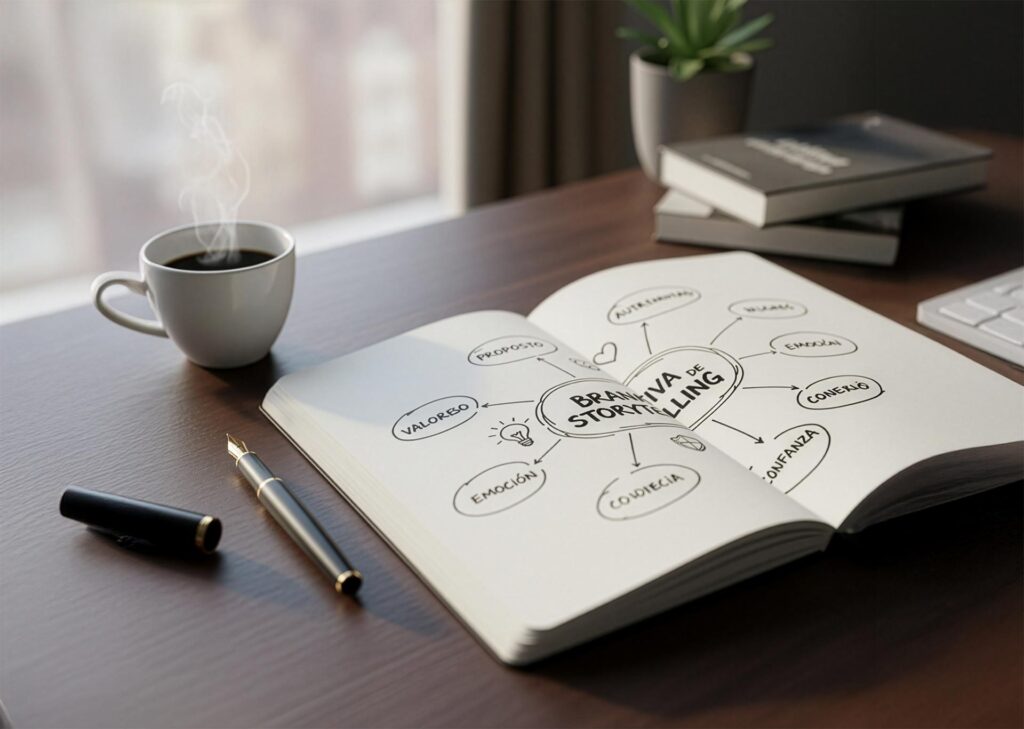
Before designing a single pixel or writing a line of code, you must define the conceptual core of your brand. This is the “Art” phase, where the emotional and psychological strategy is established.
Purpose, Mission, and Vision: The Why Your branding begins with purpose. Why does your company exist, beyond making money?
Purpose: Your reason for being (e.g., “Making technology accessible”).
Mission: What you do every day to fulfill that purpose (e.g., “Building intuitive software…”).
Vision: The future you wish to create (e.g., “A world where…”). This strategic trinity is the compass that will guide every future decision.
Brand Narrative (Storytelling) SMBs cannot outspend large corporations in advertising budgets, but they can win on authenticity and story. What were your origins? What market frustration led you to create your solution? What does your brand represent? An authentic story creates an emotional connection that advertising alone cannot buy.
Voice and Tone: How Your Brand Sounds Your brand voice is your fixed personality, while the tone adapts to the situation. Is your brand an expert (confident, authoritative), a rebel (challenging, witty), a friend (close, empathetic), or a mentor (helpful, inspiring)? This voice must be consistent across all touchpoints, from the copy on your website to your social media responses and how your sales team communicates.
Visual Identity and Color Psychology This is where the Art becomes visible. Visual identity is much more than a logo; it is a cohesive system that includes:
Typography: The fonts you use communicate personality (e.g., a serif font may feel traditional and reliable, while a sans-serif feels modern and clean).
Color Palette: Colors evoke subconscious emotions. In technology, blue is frequently used for the trust and stability it projects. Red can communicate urgency and passion, while green evokes nature and growth.
Photographic Style: Do you use clean corporate images, or warm, authentic lifestyle photos?
Once defined, this system is captured in a Brand Manual, the “bible” that ensures future consistency.

A brilliant brand strategy (Art) is useless if the experience of using your product or service (Technology) is poor. This is where Estudio Motora unites both worlds. “Technology” is how you execute your brand promise in a tangible and scalable way.
From Identity to User Experience (UX/UI) Technology translates your brand values into actions.
If your brand values transparency, your mobile app must have a clear pricing structure and intuitive navigation (good UX/UI).
If your brand values efficiency, your e-commerce site must have a one-step checkout process and instant loading speed.
If your brand values personalization, your web platform must use data to offer relevant content. Building User Experiences is the bridge between your brand promise and your customer’s reality.
Omnichannel Consistency: Web, Apps, and Social Media Your branding must be identical and instantly recognizable, whether a customer finds you through your Mobile App, your Website, or your Social Media. Technology, such as a robust Content Management System (CMS) or a Design System for your UI team, is what allows this consistency at scale.
Branding in Motion: High-Quality Photography and Video In 2026, visual assets are not a luxury; they are a technical requirement. 91% of companies already use video as a marketing tool. Professional Photography & Video is not just “Art” to make things look pretty; it is a “Technological” asset that drastically improves conversion rates, reduces buyer uncertainty, and explains complex concepts efficiently.
To illustrate this dual power, let’s analyze two startups that grew exponentially by mastering it.
Case Study – Heura Foods: The plant-based protein startup from Barcelona is a perfect example of this fusion.
The Art: They built a disruptive brand narrative: “Good Rebels.” Their voice is activist, Mediterranean, and positive. Their visual identity (vibrant colors, appetizing food photography) broke away from the boring “green” aesthetic of their competitors.
The Technology: They didn’t stop at the story. They executed their branding with an impeccable e-commerce and social media strategy. This technological execution allowed them to scale rapidly, achieving extraordinary growth of 450% in one year and reaching a turnover of 31.4 million euros in 2022. Their branding worked because the digital buying experience was as good as their story.
Case Study – Ecoalf: A sustainable fashion brand that built its empire on a clear purpose.
The Art: An unwavering purpose and a powerful narrative: “Because there is no planet B.” Their branding focuses on transparency and innovation to protect the environment, such as their “Upcycling the Oceans” project.
The Technology: Ecoalf translated this story into a high-quality product and e-commerce platform. The “Technology” of their brand is not just their website; it is the textile innovation (developing materials from fishing nets, bottles, and coffee grounds) and the logistics necessary to create a sustainable supply chain. Their branding is authentic because the technology of their product backs the promise of their art.
Branding in 2026 is a dual discipline. It requires the introspection of an artist to define its soul and the precision of an engineer to build the experience that delivers it to the world.
The SMBs and startups that succeed, like Heura and Ecoalf, understand this. They know that their brand is not just a logo, but the entire customer experience. As expert Tom Fishburne said: “The best marketing doesn’t feel like marketing. It feels like a coherent, valuable, and authentic brand experience.”
Are you ready to discover your brand’s soul and build the technological experience to deliver it to the world? Contact us for a User Experience and Branding Consultation.

Hablemos por WhatsApp